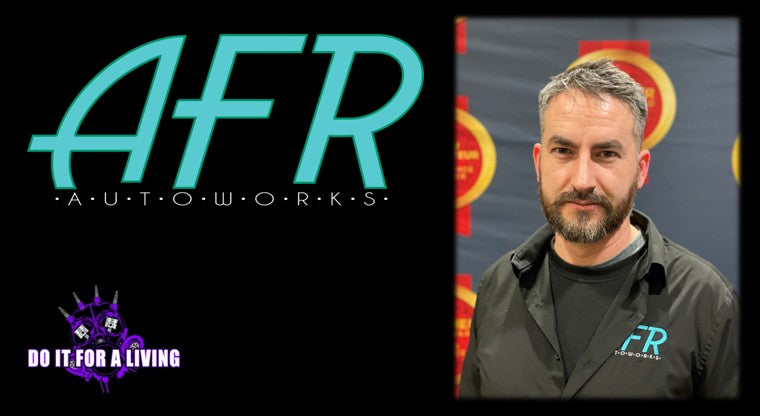

Terry Fair owns Vorshlag Motorsports in Plano, Texas. When he sat down in person with Kevin Dubois in 2016, Vorshlag was in its 12th year. It designed and manufactured camber plates and other suspension parts sold through 53 dealers, built V8 swap kits, did fabrication and full race car builds, and raced its own cars in NASA time trials.
Terry is a mechanical engineer by training, and he runs the shop like one. He weighs cars, measures parts and shares the data publicly. About a year and a half before this interview, he did something many fabrication shops think about and few plan for well. He brought CNC machining in-house.
This article covers what that really cost, when it makes sense, and what Terry learned about space, overhead, pricing big builds and marketing with content.
From autocross to a camber plate business
Terry grew up in Plano with no car people in his family. He bought a junkyard car at 14, learned paint, body and mechanical work from a family friend, and was driving his own car at 15. In high school he visited Texas A&M, rode along at a sports car club autocross, and was hooked. He enrolled there, joined the club, and earned a hands-on engineering technology degree that included machining, CNC and welding classes.
After school he worked as an engineer in the oil field. When a wave of mergers cut engineering jobs, he spent more than a year as a mechanic at a Mustang performance shop in Houston. He decided he wanted to work in the industry without being the person turning wrenches. He had run a team of about a dozen designers and drafters in his early 20s, and design was his strength.
In 2005 he and a college friend started Vorshlag. The name grew out of a website where Terry had documented builds since 1996, including an early LS swap into a BMW. At the end of 2005 they bought a small camber plate business from a friend whose design held up where popular plates wore out. Terry traded his LS-swapped BMW as part of the deal. Vorshlag grew that line to about 15 designs in the first few years. Terry quit his day job in 2008. The partnership split in 2009, which he compared to a divorce. He said it involved lawyers and made him wary of ever having a business partner again.
The real cost of buying CNC machines
For years Vorshlag had its parts machined by outside shops. Minimum orders meant hundreds of one bearing holder sitting on the shelf and counting against Terry's books at tax time. Then the oil field boom pushed machining costs up. Shops he had used for five to ten years quadrupled his minimums or doubled their prices, and stopped doing prototypes. One quoted $5,000 just to program a single piece. A new camber plate took six months to develop, so he could release only a few a year.
Terry's warning was clear. Don't take this lightly, and hire an outside consultant before you even look at machines. He talked to local owners who machined their own parts, narrowed it to a couple of brands, and happened to move across a parking lot from one supplier's headquarters. He and his engineer took multiple classes costing thousands of dollars. Months passed before they made a part they could sell.
- Machines: Figure about $100,000 per machine for moderate volume. Five-axis machines can run $300,000 to $400,000 and up. He bought one new and one used, and the used one was slower and needed more fixes.
- Software: CAM software alone was a five-figure purchase.
- Tooling: He was told to budget 10 percent of the machine price. That only got him started. Tool holders cost hundreds of dollars each, vises $600 to $1,000, and cutting steel eats carbide tools fast.
- Setup and upkeep: Leveling and wiring cost money. Coolant has to be tested daily. Each fixture might take $300 to $400 of metal and three or four hours to make.
The payoff was real. In-house parts cost about 80 percent less. Prototypes that once took six months could go from design to metal in as little as 48 hours, and the shop set a goal of a new part every week in 2016. Terry could stop a run to make parts for held-up orders. Profit was only starting to show a year and a half in.
If you're starting a new business and you're going to be making parts, do not buy CNC machines right off the bat.
He built the business to seven figures over ten years before buying machines. His test was simple. When you are spending enough with outside shops to buy a new car every month, it is time to look at bringing the work in-house.
Space, overhead and the fancy lobby
Terry ran the business from his garage for the first five years and was more profitable than he expected, because overhead was so low. Moving to commercial space and adding service work changed that. In 2016 he leased 7,500 square feet, of which only about 4,000 was shop. He thought he needed more shop and less office.
He had spent $20,000 to $30,000 improving each of his two leased buildings with hardwood floors, a lobby and screens, and said he wouldn't do it again on someone else's property. On one lease he negotiated three months of free rent in exchange for doing the build-out his own crew. Few walk-in customers turned into business. Big build customers shipped cars from as far as Hawaii and had never met him. Nobody used the upstairs lounge.
He did think some spending paid off. A clean, well-lit, organized, air-conditioned shop mattered more to him than a pretty lobby. He worked out of a hot garage early on and found that at 100 degrees you get about four useful hours out of an eight-hour day. He said time tracking in My Shop Assist showed his techs billed more hours once the shop was cooled to the high 70s. Making the shop clean, bright and comfortable was his action item for listeners.
Bigger jobs, honest pricing and logging every task
Vorshlag had six employees at the time, and Terry had run with as few as two and as many as nine. He said nine made him busier without making him happier. The work had moved from simple installs to roll cages and race car builds. Average job price had grown from about $800 to over $20,000, with some six-figure jobs. As a former project manager, he found a six-month build easier to plan than a one-day job, where a broken part means overnight shipping and a tied-up lift.
Revenue was about half shop work and half parts. His own parts carried the best margin because there was no middleman, and he sold only through dealers that did installs and refused drop shippers. A turnkey V8 swap ran $28,000 to $30,000, and he sent a stock FAQ to the many inquiries expecting a $500 swap. Every tech logged every task in MSA so the work could be billed correctly. Terry said that requirement made hiring harder. He needed people who were good mechanics, good fabricators and willing to log their time.
His shop manager handled estimates and day-to-day jobs. Terry did invoicing, and parts orders came through him. The shop met for 15 minutes every Monday morning to plan the week, and held a yearly goals meeting. He had used QuickBooks from day one, and a QuickBooks expert found deductions they were missing and taught them to split service and office labor.
Marketing with real data
Terry wrote at least 20 hours a week and spent about an hour a day taking pictures. He stacked his content in tiers. A forum build thread might run 20,000 words with 30 or 40 photos. A short blog post linked to it, and a social media blurb linked to the blog. Some threads passed a million page views. He shared setups and tire pressures from his race cars openly, because he would rather make 100 customers faster than win himself.
When he took over bookkeeping, service writing and purchasing for six months, he fell behind on build threads and saw sales weaken.
Key takeaways
- Outsource machining until your own product demand justifies the machines. Then hire a consultant before you buy.
- Budget well beyond the machine price for software, tooling, fixtures, classes and setup.
- Keep overhead low, and spend on a clean, cool, well-lit shop before a showroom.
- Have every tech log every task so big builds get billed correctly.
- Get professional help with your books, since it can find money you are missing.
- Expect seasonal cycles and plan cash flow for the lean months.
Running a fab and machine shop with My Shop Assist
Terry used My Shop Assist to have techs log every task and to see how shop conditions changed billed hours. MSA tracks time by job and task, keeps parts and purchase orders on each build, and supports progress billing for long projects that run tens of thousands of dollars. Zones and a kanban board show where each car sits, and jobs export to QuickBooks. See how MSA fits custom fabrication and machine shops.
To track your own builds and in-house parts, start a free 30-day trial.